

Case Studies
Flameproof Ex Motor for Hazardous Areas

In explosion-hazard environments—on drilling rigs, in petrochemicals, or on anchor and mooring winches—electric drives must meet special safety requirements. To ensure that no spark can escape from the inside to the outside, a flameproof enclosure is required. For applications like these, BEN Buchele developed and certified a new type of Ex motor.
The motor, designated dKD280, is rated for the highest explosion group, IIC, and temperature class T4, and covers outputs from 50 to 200 kW. What sets it apart is the combination of several requirements in a single frame size: protection ratings up to IP68, a flameproof enclosure, temperature resistance from −35 to +50 °C, and an integrated electromagnetic brake rated at 3,300 Nm to securely hold the anchor or mooring lines on large vessels.
The full article explains the underlying zone and standards requirements, the additional functions that can be added, and why individual design is decisive.
You can download it as a PDF here.
Shock-Resistant Electric Motors for Naval Applications
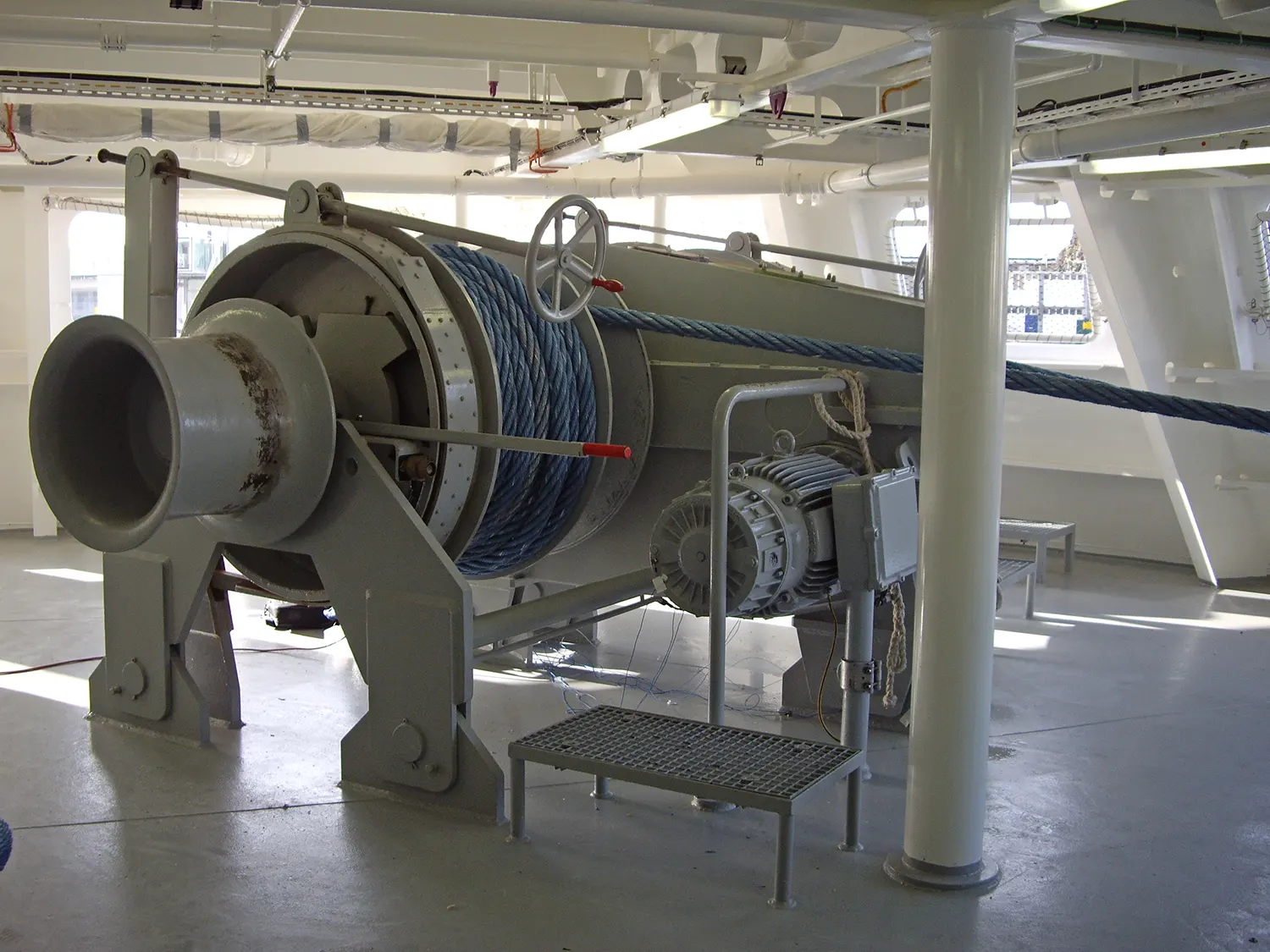
At sea, electric drives must not only run reliably but also withstand brief extreme loads. Impacts and shocks—such as from weapons fire on naval vessels—generate many times the acceleration of gravity. Classification societies set limits for this, and the overriding rule is that under a shock load, no component may come loose. This article describes what matters in designing shock-resistant motors.
The decisive factor is the required load in g. In the standard range up to 15 g, robust grey cast iron motors suffice; for moderate loads, high-strength bolts and specially protected windings are added. For large frigates, materials, bolts, and bearings are designed individually, often using spheroidal graphite iron, which absorbs sudden impacts better without breaking.
The article presents the three shock-resistance categories, shows typical applications from mooring and anchor winches to pump motors, and describes a real shock test conducted from three directions.
What Matters in Submersible Motors
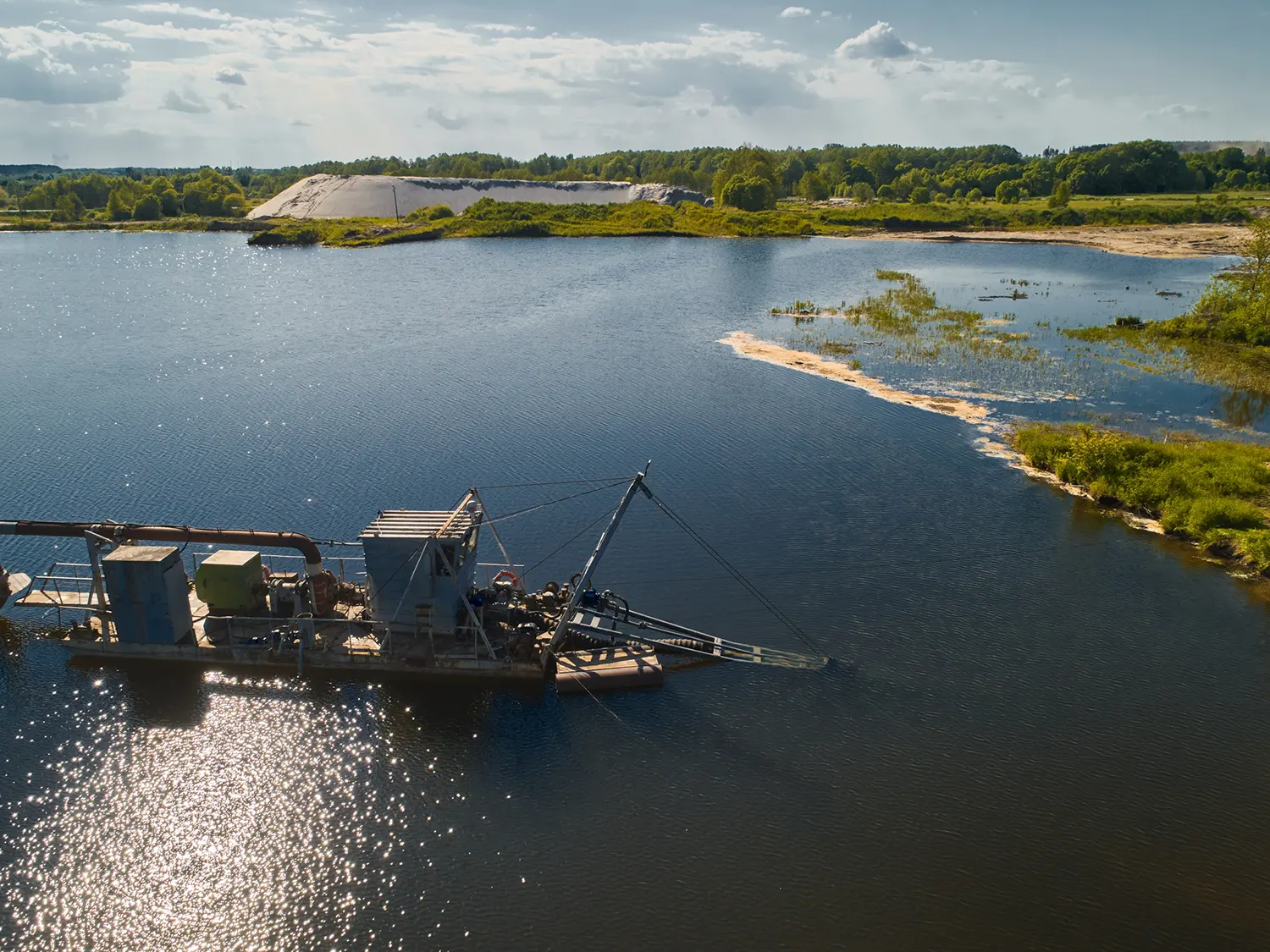
Suction dredgers keep navigation channels clear and extract raw materials such as quartz sand, driven by pumps whose motors run permanently underwater. Whether in the Main-Danube Canal, in Dutch canals, or in the settling basin of a quartz sand plant, designing these submersible motors places special demands on the engineering. This article shows what matters.
Beyond the usual key figures such as output and speed, water depth, immersion time, and the medium determine the design. The central challenge is sealing: a single forgotten plug can render a motor inoperable. The article explains why IP68 protection is standard, when a connector solution makes more sense than a cable, and what role anti-condensation heaters, submersible cables, and a simple water detector play.
Logistics also come up—for example, the leak test of a three-ton motor, which, for lack of a suitable immersion tank, was carried out using compressed air and leak-detection spray instead.
Chicago: Dredger with Hybrid Drive for the Port of Hamburg
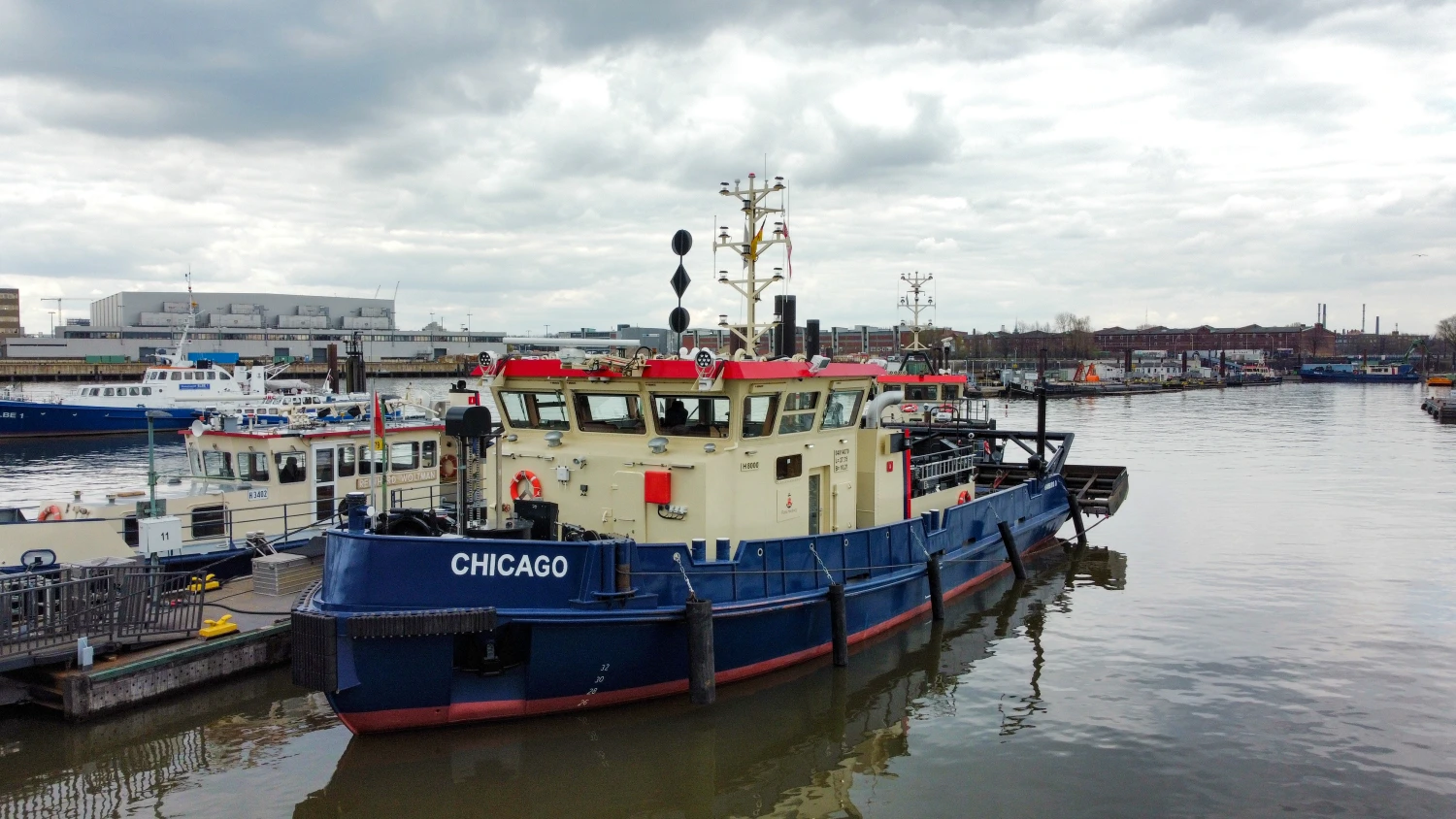
Hybrid drives combining conventional diesel and high-tec electric motors were long the exception in shipbuilding. As emission limits tighten and the energy transition advances, they are increasingly becoming a serious alternative—including for work vessels in port operations. The dredger “Chicago,” which operates in the Port of Hamburg, shows how such a system is engineered in practice.
The article describes the interplay of two components: the hybrid system from transmission specialist REINTJES and the water-cooled electric motors from BEN Buchele. Under electric power, the vessel moves through the harbor with low noise and low emissions; for the actual leveling work, it switches to diesel operation. The full article explains what this demands of the auxiliary motors’ speed map, design, and cooling—and why an islanded solution via the DC link offers advantages.
Pump Motor for the bilge — From Inquiry to Concept
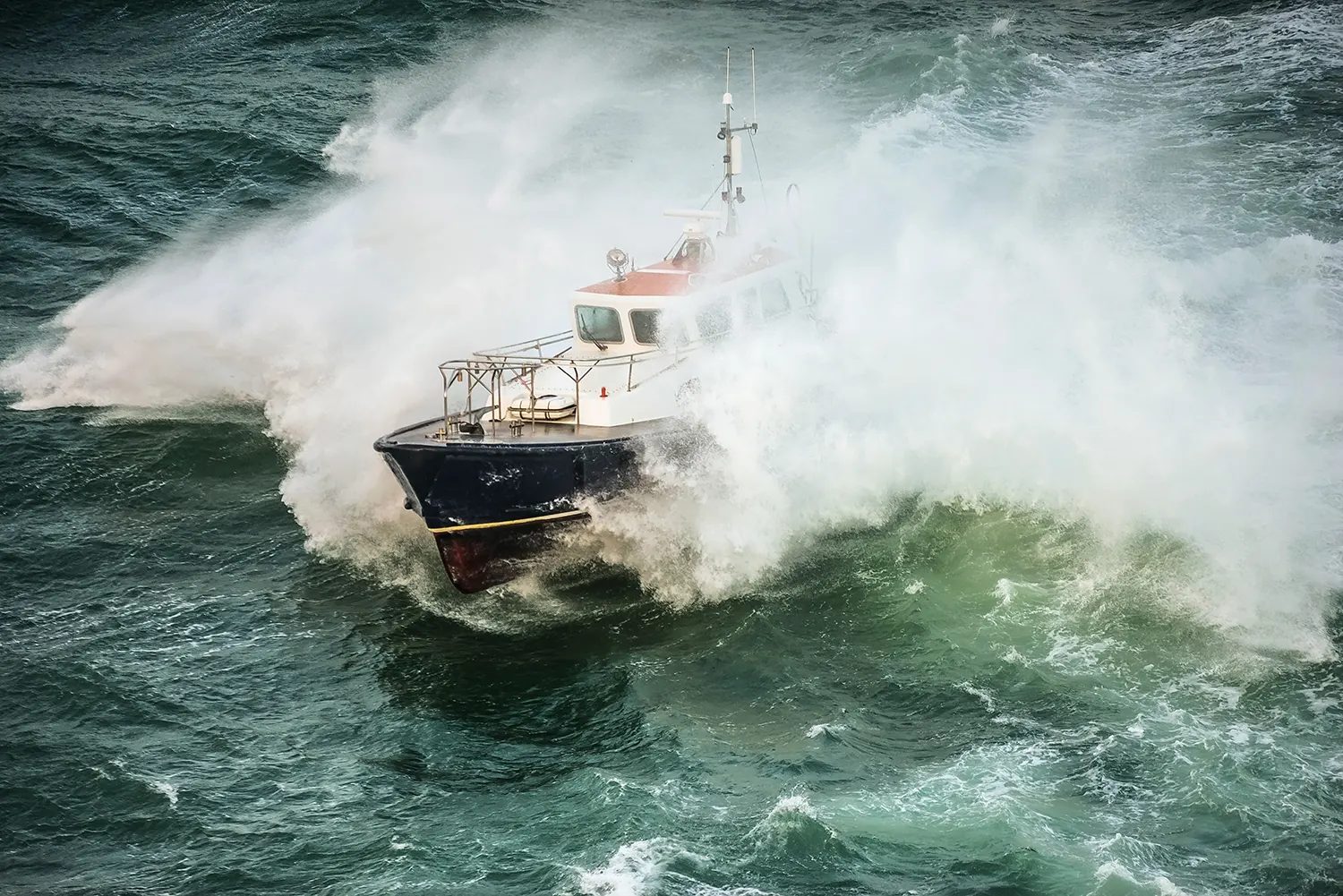
When water enters the hull in rough seas, it collects at the lowest point—the bilge. A powerful pump must then move it back out quickly, in an emergency even when the drive itself is already underwater. This case study shows how such an inquiry led to a precisely tailored motor concept.
The requirements were 36 kW, continuous duty, and IP68 protection—with vertical mounting and an ambient temperature of 45 °C. From these parameters, our engineers at BEN Buchele developed three variants: a compact water-cooled motor, a non-ventilated motor of larger design, and an air-cooled motor with a slipping clutch. The slippling clutch disengages the fan as soon as rising water makes the resistance too great, protecting the motor from overheating.
The full article explains which trade-offs between safety, installation effort, and cost were decisive, and why the third variant was ultimately chosen.
You can download it as a PDF here.